Peer Review Reference Checker —
2 Minutes, Not 2 Hours
Verify every citation in a submitted manuscript before writing your review.
Fabricated references become documented findings, not suspicions.
Why Peer Reviewers Need a Reference Checker Now
AI-assisted manuscript preparation has shifted a burden onto reviewers that did not exist before. Authors use ChatGPT, Copilot, and similar tools to draft and edit their papers. These tools hallucinate citations — generating references that look real but do not exist, or that exist but with wrong authors, wrong titles, or wrong journals. The author may not even know. That does not make it your problem to absorb.
The risk extends beyond manuscripts where AI was explicitly used for references. Any use of AI for editing or rephrasing — improving an abstract, tightening a conclusion — can silently alter citations in that text. This is intrinsic to how generative models work. The author reviewed the prose. The citation changed underneath.
Manually verifying 30–50 references takes 1–2 hours of a peer review. At any academic hourly rate, that time costs more than the tool.
What It Catches in a Manuscript
- Non-existent papers — no match in CrossRef, OpenAlex or Semantic Scholar despite plausible metadata
- DOI resolves to the wrong paper — different title, different authors, different year
- Correct title, fabricated authors — the paper exists; the listed authors did not write it
- Real journal, invented volume or issue — metadata inconsistencies invisible to superficial review
- Duplicate references — the same paper listed twice under different formats
Each finding is specific, database-verifiable, and documentable. Not a suspicion — a fact you can cite in your review report.
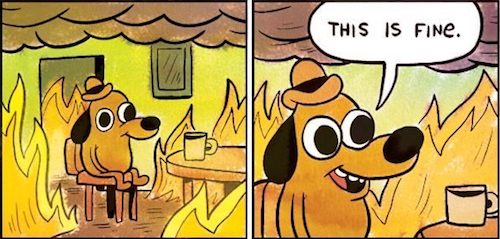
Making groceries ...
Calling the plumber ...
Deadline in 47 min ...
Just 113 citations to check.
How Peer Reviewers Use It
Before writing your review
Paste the manuscript's reference list. Get a full report in 2 minutes. Fabricated citations become objective, documented findings you can reference directly. Verified references are reformatted from CrossRef metadata and can be exported in any citation style as a Word document — useful for providing corrected versions in your review report.
Editorial desk screening
First-pass check at intake. Desk-reject manuscripts with fabricated references before they consume reviewer time and damage your journal's credibility.
Thesis examination
Run the bibliography before the defence. A hallucinated reference is an objective, verifiable fact — not a vague concern about AI use.
Why Fabricated References Are Not a Minor Finding
A fabricated reference is not probabilistic like AI text detection. It is binary: the paper exists in academic databases or it does not. Unlike stylistic AI tells — which are contested, challenged in courts, and rejected as sole evidence by most institutions — a missing citation is objective and documentable.
Published papers with fabricated references have been retracted. Authors have faced misconduct proceedings. The tools to catch this at the review stage now exist. Using them is due diligence.
Free to Start. Priced for What It Saves.
A single peer review takes at least 1–2 hours of reference checking. At any academic hourly rate, the tool pays for itself on the first use. The question is not whether you can afford it — it is whether you can afford to keep doing it manually.
Free — $0
Daily credits — enough for a typical manuscript reference list. Refreshed every day. No credit card.
Silver — $9.99
90 days Regular access + 2,500 credits. For regular reviewers or editorial teams. One-time, no subscription.
Gold — $19.99
180 days Regular access + 6,000 credits. For sustained editorial or committee workflows.
30 seconds to set up. 2 minutes to check a manuscript.
Free account. No credit card.
Start Free Verification